Number Sequences & Number Patterns are maths skills that are often tested in 11+ exams and Selective School exams in the UK. This includes: “Find the Rules” in diagrams and numbers to the nth degree.
Examples
Example Question 1:
Find the missing numbers in these number sequences:
(a) 0.01, 0.1, 1.0, 10, 100, ? , ?
(b) 25, 36, ? , 64, 81, ?
(c) 4, 5, 9, 14, 23, 37, ?
Answers:
(a) 1,000 and 10,000
(b) 49 and 100
(c) 60
Explanation:
(a) Each number in this sequence is multiplied by 10 to find the next number.
(b) This is a square number sequence and the missing numbers are 7² = 49 and 10² = 100
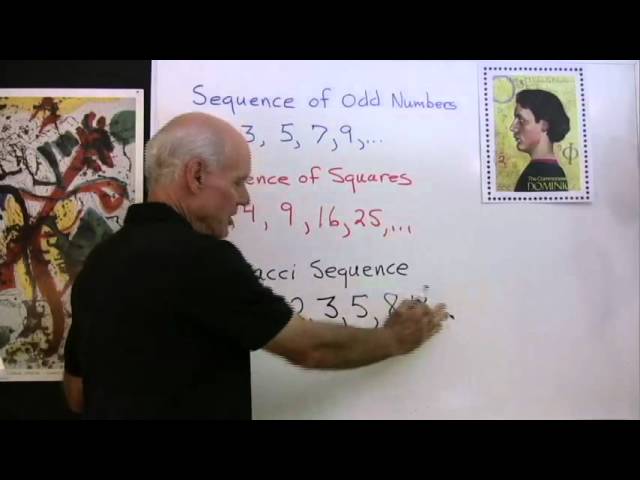
(c) This is a Fibonacci sequence. The previous two numbers are added together to find the next number, so 23 + 37 = 60
Example Question 2:
What is the 100th number in this number sequence? 4, 10, 16, 22, 28
Answer: 598
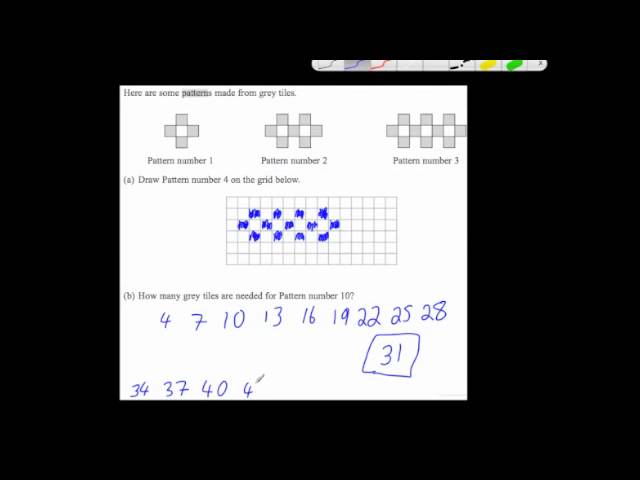
Explanation: This is a n’th term question where you have to find a number much further along in a sequence. First find an algebraic rule by finding out which times table the sequence is related to. This is found by looking at the difference between the numbers (= 6) and working out how the numbers in the six times table are related to the numbers in the sequence = × 6 and then – 2 which gives you the formula 6n – 2. Apply this to the number (or term) in the question: 100 × 6 = 600, then – 2 = 598.
Video Tutorials
Numbers to the nth Term
Change Cookie Settings

Change Cookie Settings

Sequences in Maths
Change Cookie Settings

Fibonacci Sequence
Change Cookie Settings
Patterns to the n’th term
Change Cookie Settings